Since 2006, Securisea has brought practitioner-level knowledge to the places where SOC 2 examinations get complicated for modern software companies — teams whose data center is an AWS account, whose change management lives in a CI/CD pipeline, and whose access controls span dozens of third-party tools. We know the failure points before they surface in fieldwork:

Whether the destination is a Type 1 or Type 2 report, enterprise procurement, or a customer security questionnaire, Securisea brings the specialized SOC 2 knowledge that SaaS environments demand.


For SaaS companies, SOC 2 often becomes a requirement before larger customers are ready to sign.Enterprise buyers want proof that your company can protect customer data, manage access, monitor systems, and respond to security risks. Without a SOC 2 report, your sales cycle can slow down, security questionnaires can pile up, and your team may be left trying to figure out compliance while still shipping product.Securisea’s examiners understand where SOC 2 requirements intersect with product, engineering, and DevOps workflows — and where examinations stall when the audit team doesn’t.
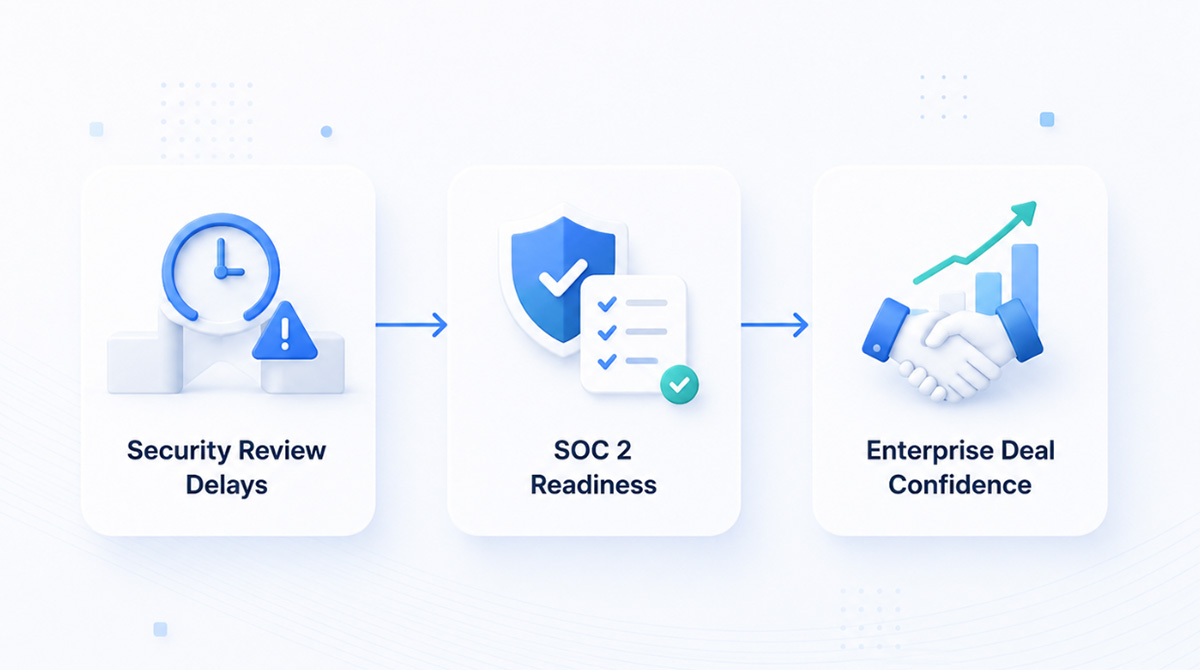


SOC 2 examinations break down when auditors don’t understand the environment they are examining.
Securisea examines the controls that matter most to cloud-based companies — access management, change management, monitoring, incident response, vendor risk, data protection, and system availability — in the context of how modern engineering teams actually operate. Our auditors are fluent in the systems where those controls live: identity providers, CI/CD pipelines, infrastructure-as-code, and observability platforms.
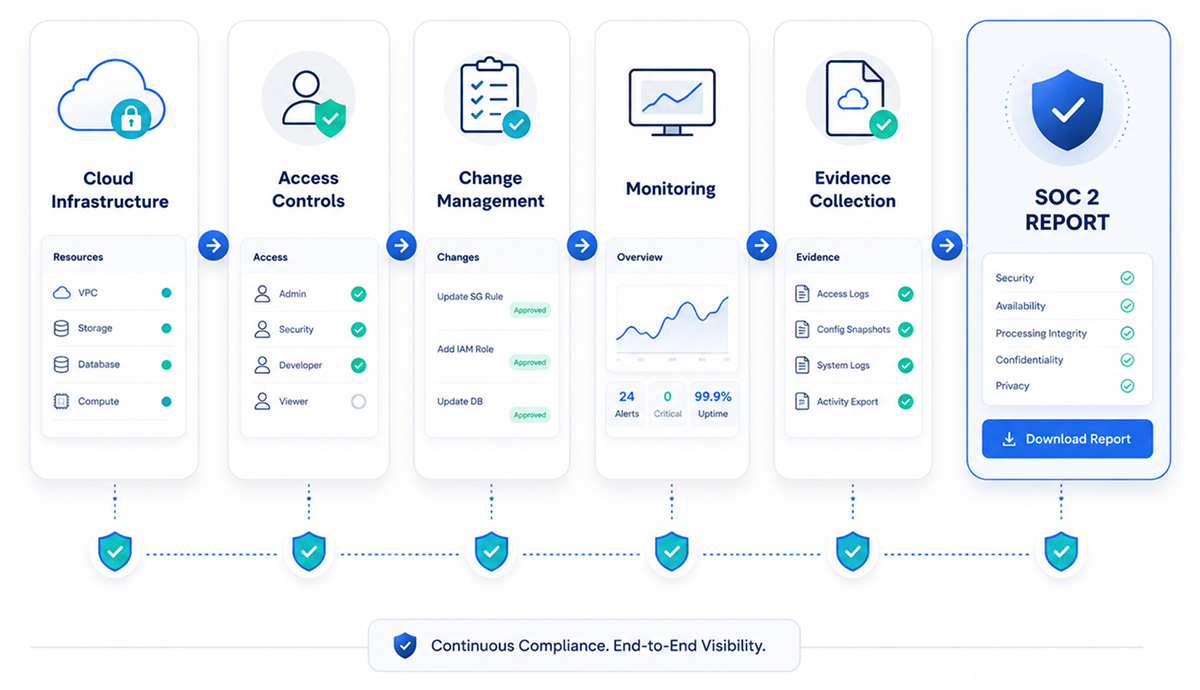

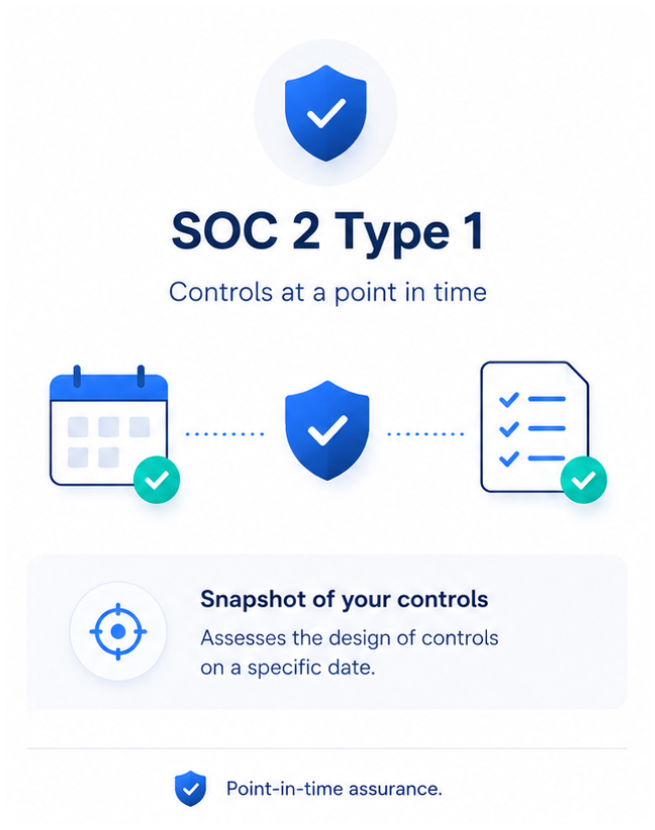
A well-run SOC 2 examination follows a defined sequence, with scope, criteria, and evidence expectations established up front.
Our process may include:
We learn about your SaaS platform, systems, customer requirements, and business goals.
We assess your current controls, policies, procedures, and evidence.
We identify what is missing, unclear, or not yet ready for SOC 2.
Identified gaps are documented against the specific Trust Services Criteria they affect, so remediation can be prioritized before the examination period.
Evidence requests specify the populations, samples, and documentation the examination will draw on, mapped to systems of record like your IdP, ticketing, and CI/CD tooling.
Once ready, your controls are reviewed for the selected SOC 2 report type.
You receive a SOC 2 report that can support customer trust, vendor reviews, and enterprise sales conversations.